Shopping Cart
There are no more items in your cart

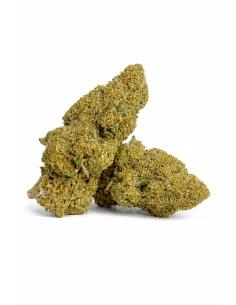
THCX flower is usually low-THC hemp flower that has been sprayed, infused or coated with a cannabinoid blend sold under the THCX label. Its effects, strength and legal status depend on that added formulation, which is rarely standardized, so check the lab report for potency, pesticides, heavy metals and residual solvents before buying. It can still cause a positive drug test.
Key takeaways
THCX flower sits in a fast-moving corner of the cannabinoid market, where new labels, new formulations, and new product formats appear quickly. For adults in Europe, the topic matters because the legal status, quality controls, and reported effects of these products can vary widely across countries and across brands. [1] [2] [3]
In practice, THCX flower usually refers to hemp flowers that have been enriched with additional active ingredients rather than a universally defined cannabis variety. That makes quality, formulation, and safety more important than the name alone. [2] [4] [5]
This guide explains what THCX flower is, how THCX products are typically produced, what experienced users often look for, and where the main risk factors appear. It also covers screening tests, THC-like metabolites, and the reasons many consumers should read product data carefully before use. [1] [2] [4]
Table of contents
THCX flower is generally sold as hemp flower that has been enhanced with cannabinoids after harvest. The base material is often carefully cultivated hemp chosen for appearance, smell, and cannabinoid profile. [2] [4] [5]
Unlike traditional THC flower from regulated cannabis systems, THCX flower is usually built from legal hemp material plus added compounds. That distinction affects legality, purity, and how the product should be evaluated. [2] [3] [4]
The flower itself may look dense, resinous, and visually similar to standard cannabis flowers. In many cases, the final potency depends less on the plant and more on the added formulation carried on the surface or infused into the bud. [4] [5]
Some products are marketed as natural because the base flowers come from hemp. Still, the finished item may include semi-synthetic active ingredients derived from hemp cannabinoids rather than only compounds naturally present in the harvested flower. [2] [4]
That is why THCX flower should be understood as a product category first and a botanical category second. The label describes a commercial formulation more than a single plant type. [2] [4]
Adults who search for THCX flower often want a legal alternative that feels closer to traditional THC than standard CBD products. They may also expect a rapid onset, noticeable intensity, and a stronger relaxing effect than many low-THC hemp items. [1] [4]
Many brands position THCX as an innovation within the legal hemp world. The marketing language often focuses on potency, taste, and longer duration, even though independent research on these exact products remains limited. [1] [4] [6]
THCX is not presented in major public health references as a standardized single molecule with one universally accepted composition. In the market, terms such as THCX and delta x can be used loosely, which means consumers should not assume that two similarly named products share the same chemistry. [1] [4] [6]
This matters because products with similar names may differ in active ingredients, dosage, and safety profile. For adults trying to compare products, the label alone is not enough. [4] [5]
In the current market, THCX often refers to a blend or modified cannabinoid formulation derived from hemp compounds. The term may cover enriched flowers, resins, vapes, edibles, and pre-roll formats. [2] [4] [6]
That market reality explains why effects of THCX can vary so much between manufacturers. One formulation may emphasize fast onset and relaxation, while another may focus on stronger intensity or a different taste profile. [4] [5]
The world of semi-synthetic cannabinoids has expanded quickly in Europe. EUDA has noted growing concern around new cannabinoids and semi-synthetic cannabinoids, especially where consumers may not fully understand what they are buying. [4] [6]
Because of that, it is safer to think of THCX as a commercial umbrella term than as a settled scientific category. That framing helps adults explore the subject with fewer unrealistic claims in mind. [4] [6]
Production usually starts with hemp flowers that meet legal thresholds for Delta-9 THC in the relevant jurisdiction. In the European Union, hemp cultivation rules refer to certified varieties and a THC limit of 0.3% for the plant in agricultural policy, but finished consumer product legality can still vary by country. [2] [3]
After harvest, the flowers may be dried, trimmed, and selected for look, smell, and structure. Producers often prefer dense flowers with visible resin and a stable moisture level. [5]
A cannabinoid distillate or coating is then applied. This may be sprayed, infused, dusted, or otherwise integrated into the flower depending on the production method. [4] [5]
Some formulations also include terpenes to shape smell and taste. Pine, citrus, herbal, or sweet notes are often emphasized because users still expect a recognizable cannabis profile. [5]
The final product should then be tested for potency, pesticides, heavy metals, residual solvents, and microbiological contamination. Without those screening tests, claims about purity and quality are weak. [4] [5] [7]
| What to check | Why it matters |
|---|---|
| Potency (cannabinoids, THC) | Final potency depends more on the added formulation than on the plant. |
| Even distribution | Poor production can make one part of a flower much stronger than another. |
| Pesticides and heavy metals | Cannabis-derived products can contain them if production controls are weak. |
| Residual solvents and microbes | Purity is not only about cannabinoids. |
| Active material per gram | Without it, using the product responsibly is harder. |
A well-made product aims for consistency across batches. That includes dose per quantity, even distribution of active ingredients, and a formulation that does not leave obvious hot spots on the flower. [5]
Poor production can produce uneven potency. One part of a flower may be mild, while another part may be much stronger. [5]
That is one reason why experienced users still need caution. Familiarity with cannabis does not guarantee familiarity with enriched flowers. [1] [4]
THCX products are not limited to flower. The same market often includes concentrated hash, resins, cartridges, gummies, and ready-to-use formats such as THCX pre rolls and moon rocks. [4] [6]
Enriched flowers are popular with adults who prefer smoking or vaping rituals. These products preserve the look and smell of hemp flowers while adding extra cannabinoids. [4] [5]
Concentrated hash and resins are usually aimed at users seeking greater potency. Their texture, dose control, and effects can differ from flowers, even when the brand uses the same THCX name. [4] [5]
THCX pre rolls combine convenience with strong delivery. Because the material is already prepared, the user has less control over quantity than with loose flowers. [5]
Moon rocks usually sit at the high end of intensity because flowers are combined with concentrates and sometimes coated further. They are not a beginner format. [4] [5]
Compared with many CBD products, these items are usually marketed for psychoactive rather than wellness-only use. That does not make them automatically unsafe, but it does change the expected effects and the safety conversation around dosage and setting. [1] [4]
Questions about the legal status of THCX are more complicated than they first appear. A product may be derived from hemp and still face restrictions if authorities classify the finished formulation differently from raw hemp material. [2] [4]
The legal status depends on more than one factor. It can involve the source material, the production method, the final THC content, national drug law, and whether the product is treated as a novel or semi-synthetic cannabinoid item. [2] [3] [4]
In some places, low-THC hemp products are tolerated if they stay within legal thresholds. In others, even low-THC cannabis items can face strict interpretation depending on use, presentation, or psychoactive potential. [2] [3]
That is why legality should never be reduced to one number on a label. A product can meet an agricultural hemp threshold and still raise separate legal issues as a consumer good. [2] [3]
For adults in Europe, the safest reading is that THCX legal status remains jurisdiction-specific and subject to change: the status of a given product depends on its actual composition, the country and the date, and a trade name is not legal advice. The market has moved faster than regulation in several areas of new cannabinoids. [3] [4] [6]
The effects of THCX are usually described by users and sellers rather than by a large body of independent clinical research. Reported effects often include fast onset, a relaxing effect, altered sensory perception, and a longer duration than many people expect from standard hemp products. [1] [4] [6]
Some adults describe a clearer mental profile than traditional THC, while others describe a similar cannabis-like heaviness. The potential effects may depend on the exact formulation, the dose, and the user. [1] [4]
Rapid onset is especially relevant when the product is smoked or vaped. Inhaled cannabinoids can reach the bloodstream quickly, which is one reason overconsumption can happen faster than with edibles. [1] [8]
The relationship between potency and well being is not simple. A stronger product does not automatically mean a better experience, and higher intensity can increase unwanted effects such as anxiety or discomfort. [1] [8]
For that reason, reported effects should be described carefully. Some users report relaxation, mood lift, and body heaviness, but these reports do not replace controlled research. [1] [6]
The main risk factors include uncertain formulation, variable potency, contamination, overuse, and mistaken assumptions about legality. These concerns become more important when a product is sold under a broad market label instead of a tightly regulated specification. [4] [5] [7]
Dry mouth and red eyes are common cannabis-related complaints. Anxiety, dizziness, confusion, or strong sedation may also occur, especially at higher dose levels. [1] [8]
Alcohol can amplify impairment. Mixing cannabinoids with alcohol may increase unpredictability and is a poor choice for users trying to judge their response clearly. [1]
People who are pregnant or breastfeeding should avoid cannabinoid products unless specifically directed by a clinician. Public health agencies also urge caution in people with mental health vulnerability or cardiovascular concerns. [1] [7]
Contamination is another overlooked issue. Cannabis-derived products can contain heavy metals, pesticides, microbes, and solvents if production and storage controls are weak. [5] [7]
Unrealistic claims are also a risk factor in themselves. When a seller promises exceptional purity, guaranteed legality, or perfectly predictable effects without documentation, caution is warranted. [4] [5]
Screening tests are a major concern for adults who work, drive professionally, or face routine testing. Standard drug testing typically looks for cannabinoid metabolites rather than a brand name or product label. [9]
That means THCX products can still create problems if the body forms THC like metabolites after use. A label that says hemp does not guarantee a negative result. [9]
THC-COOH is one of the best-known metabolites associated with cannabis exposure. Drug testing programs commonly monitor cannabinoid metabolites, which is why users should assume a real possibility of detection. [8] [9]
Saliva, urine, and other screening tests do not usually care whether the source was traditional THC, enriched flowers, or another cannabinoid product with overlapping metabolism. From a practical point of view, the risk is the same: a positive test may still occur. [8] [9]
Reported effects usually center on relaxation, body heaviness, altered perception, and a quicker shift from baseline than many CBD-focused hemp items produce. [1] [4]
Some users notice a pronounced smell and taste closer to cannabis than standard hemp flower. Pine and herbal notes are often mentioned when terpene-rich flowers are used. [5]
Others focus on the smoothness of the smoking experience, though that can depend heavily on the underlying flower, moisture, and the coating or infusion used in production. [5]
Not all reported effects are positive. Some consumers report discomfort, excessive sedation, anxious thinking, or a dose that felt larger than expected. [1] [4]
That range of outcomes is exactly why descriptions of THCX effects should be treated as broad and product-specific rather than universal. [4] [6]
User experiences vary more than promotional descriptions suggest. One reason is that products sold under the same label may be produced by different manufacturers using different raw materials and different active ingredients. [4] [5] [6]
Experienced users may find the transition from CBD products to enriched flowers sharper than expected. Familiarity with cannabis helps, but it does not eliminate the need for dose control. [1] [4]
Consumers who value consistency often look for third-party lab reports, clear dosage information, and evidence that the flower was carefully cultivated before enrichment. [2] [5]
They also tend to avoid products with vague language about purity, mystery blends, or secret processes. In a category shaped by innovation, transparency matters more than hype. [4] [5]
Quality starts with the flower itself. The bud should look natural rather than artificially wet, dusty, or excessively coated. [5]
Smell matters too. A clean cannabis or hemp aroma is preferable to a harsh chemical smell. [5]
Lab testing is essential. Adults should look for potency data, screening tests for pesticides and heavy metals, and signs that the formulation was actually measured rather than guessed. [5] [7]
Purity is not only about cannabinoids. Solvents, contaminants, and uneven production can all affect safety and experience. [5] [7]
A serious producer should also give usable dosage guidance. When a product hides the dose or the quantity of active material per gram, it is harder to use responsibly. [5]
Stock descriptions and flashy names should never outweigh analytical data. Good products are defined by documentation, not only branding. [4] [5]
Start low. Even adults familiar with cannabis should treat a new THCX product as unfamiliar until they see how it behaves. [1] [8]
Use a small dose and wait before increasing quantity. Fast onset does not mean every effect appears at once. [1] [8]
Avoid driving, cycling in traffic, or operating machinery after use. Impairment can appear even when the user feels calm rather than obviously intoxicated. [1] [8]
Avoid mixing with alcohol. That combination makes judgment less reliable. [1]
The essential point is simple: stronger does not always mean better. A controlled dose is usually safer than chasing intensity. [1] [8]
THCX flower is generally hemp flower that has been enhanced with cannabinoids after harvest, by spraying, infusing, dusting or coating it with a distillate. The label describes a commercial formulation more than a plant type, so two similarly named products may contain different active ingredients.
There is no single answer. Legal status depends on the source material, the production method, the final THC content, national drug law and whether the product is treated as a semi-synthetic cannabinoid item. The status of a given product depends on its actual composition, the country and the date, and a trade name is not legal advice.
Users mostly report relaxation, body heaviness, altered perception and a fast onset when the flower is smoked or vaped. Some also report discomfort, anxious thinking, excessive sedation or a dose that felt larger than expected. These reports do not replace controlled research.
Yes, it can. Standard drug tests look for cannabinoid metabolites such as THC-COOH rather than a product name, so a label that says hemp does not guarantee a negative result.
Look for potency data and tests for pesticides, heavy metals, residual solvents and microbiological contamination, plus the quantity of active material per gram. Without these results, claims about purity and quality are weak.
THCX flower is best understood as an enriched hemp product category shaped by fast market development, mixed formulations, and uneven regulatory clarity. The term may sound simple, but the reality behind it involves legality, production quality, active ingredients, and user-specific response. [2] [4] [6]
For adults in Europe, the most important issues are not hype or novelty. They are safety, realistic expectations, lab testing, and the recognition that THCX products may still lead to cannabis-like effects and positive screening tests. [4] [5] [9]
That is why THCX flower should be approached with the same caution used for other potent cannabinoid products. The better the documentation and the lower the starting dose, the more predictable the experience is likely to be. [1] [5]