Shopping Cart
There are no more items in your cart

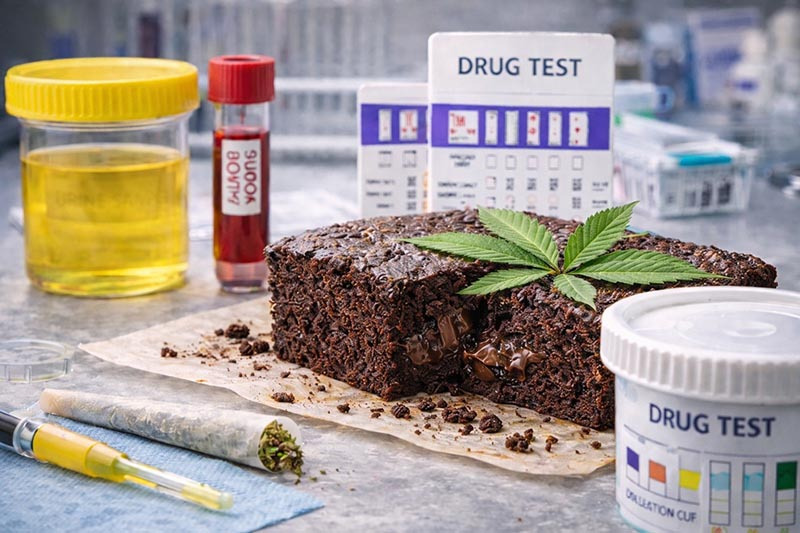
Yes. Space cake can cause a positive drug test, because tests look for THC metabolites that are stored in fat cells and released slowly. Urine tests can detect use from a few days after occasional use to several weeks with regular use, blood tests for about a day in occasional users, and hair tests for up to 90 days. Edibles tend to stay detectable longer than smoked cannabis.
Key takeaways
Space cake is widely known as a potent form of cannabis consumption, especially across Europe. As a baked good infused with compounds from the cannabis plant, it belongs to a broader category of marijuana edibles and cannabis edibles that behave very differently from smoking.
A common concern among adults is whether space cake can be detected during a drug test. This question matters because edibles interact with the human body in a unique way, often producing longer-lasting effects than inhaled forms.
This article explains, from a scientific and harm-reduction perspective, whether space cake shows up on drug tests, how long compounds stay in your system, and which several factors influence detection time. No medical advice is given.
Table of contents
Yes, space cake can cause a person to test positive on a drug test. Space cake contains THC, the psychoactive compound found in marijuana. Once consumed, THC is processed by the digestive system and transformed into compounds that drug tests are designed to detect.
Unlike smoking marijuana or inhaled THC, consuming edibles leads to delayed onset but longer presence in the body. This is why drug tests may detect cannabis use days or even weeks after consumption.
Because cannabis products are constantly evolving, the potency of modern food products such as baked goods can be higher than expected. This increases the likelihood of detection, especially after higher doses or recreational use involving large quantities.
A drug test does not detect cannabis itself but looks for marijuana metabolites left behind after THC is processed. The detection window depends on the type of drug, the test method, and various factors related to the person.
Urine drug tests are the most common. Urine tests analyze a person’s urine for marijuana metabolites and are widely used in workplace screening. Blood tests, saliva tests, hair follicle tests, and sweat tests are also used, each with different detection time ranges.
Because THC is fat soluble, it accumulates in fat cells and exits the system slowly. This explains why drug use involving cannabis may be detectable long after the psychoactive effect has faded.
Marijuana edibles include baked goods, candies, and other food products infused with THC. Space cake is considered a potent form of marijuana edibles because it often contains higher doses than expected.
Unlike smoking, marijuana edibles do not produce immediate effects. The psychoactive effect may appear after up to two hours, making dosing unpredictable for casual users and occasional users.
This delayed onset contributes to higher doses being consumed unintentionally, which increases THC levels in the human body and extends detection time.
Cannabis edibles are processed through the digestive system rather than the lungs. This difference changes how cannabis makes its way through the body and how long it stays detectable.
When consuming edibles, THC is converted in the liver into compounds that are more potent and longer lasting. As a result, cannabis edibles often produce a more potent form of intoxication compared to smoking cannabis.
Cannabis users who consume edibles regularly may accumulate higher concentrations over time, especially habitual users with slower metabolisms.
How long cannabis stays in your system depends on several factors. These include body mass, body fat percentage, quantity consumed, frequency of marijuana use, and overall health.
For urine drug tests, detection time can range from a few days for casual users to several weeks for cannabis regularly consumed. Hair follicle tests can detect drug use for up to 90 days through hair samples.
| Test | Typical detection window in this guide |
|---|---|
| Saliva | recent use; on average about 8 to 24 hours |
| Blood | about a day in occasional users |
| Urine | a few days (occasional use) to several weeks (regular use) |
| Hair | up to 90 days |
The exact length depends on individual metabolism, the half-life of THC compounds, and how much and how often cannabis was consumed.
THC edibles behave differently from inhaled THC. Because they are absorbed through digestion, they stay in the body longer than other forms of cannabis.
Blood tests may detect THC edibles for about a day in occasional users, while urine tests detect metabolites much longer. Saliva tests usually detect recent THC use but may still return positive results.
THC edibles are considered a more potent form due to how they are metabolized, which is why detection window periods are often extended.
Once THC enters the human body, it is broken down into THC metabolites. These metabolites are what most tests are designed to detect.
Marijuana metabolites are stored in fat cells and released slowly over time. This slow release explains why edibles stay detectable even after the psychoactive effect has ended.
Higher doses and large quantities increase metabolite buildup, extending detection time and increasing the chance to test positive.
Some patients use prescribed medical marijuana. No medical benefit has been established for space cake or similar edibles, and they are not a treatment. Either way, medical marijuana does not prevent detection on drug tests.
Drug tests do not differentiate between medical marijuana and recreational cannabis use. THC use, regardless of purpose, can result in positive results.
Patients should be aware that even trace amounts may be detected depending on testing sensitivity and individual biology.
Cannabis use patterns strongly influence detection outcomes. Occasional users may eliminate THC faster than those who use cannabis regularly.
Habitual users tend to have longer detection windows due to cumulative storage in fat cells. Slower metabolisms further increase detection time.
Cannabis users should understand that drug tests are designed to detect cannabis use, not impairment or recent intoxication.
Inhaling cannabis through smoking delivers THC directly into the bloodstream. Smoking cannabis and smoking marijuana lead to faster onset but shorter detection compared to edibles.
Inhaled THC leaves the body faster than edible-based THC. However, frequent smoking can still result in long detection times.
Other forms such as vaping behave similarly to smoking but still differ from consuming edibles in how long compounds stay detectable.
Edibles stay in the body longer than inhaled forms. This is due to digestion, liver processing, and fat solubility.
For urine tests, edibles stay detectable from several days to weeks. Hair follicle tests detect cannabis use through hair follicles for extended periods.
Exact length varies based on body fat, body mass, higher doses, and frequency of drug use.
Many people ask if it is possible to metabolize THC faster. There is no scientifically proven method to eliminate THC quickly.
Hydration, exercise, and diet do not reliably speed up the process. The human body eliminates THC at its own pace, depending on individual biology.
The only reliable way to avoid testing positive is abstaining from cannabis products long enough for complete elimination.
Yes. Space cake contains THC, and drug tests look for the THC metabolites left behind after the body processes it. Depending on the test, use can be detected days or even weeks after consumption.
For urine tests, detection time ranges from a few days for occasional users to several weeks for regular users. Body fat, quantity consumed and frequency of use all change the window.
Saliva tests usually detect recent use, and blood tests detect THC for about a day in occasional users. Hair follicle tests can detect cannabis use for up to 90 days.
There is no scientifically proven method to eliminate THC quickly; hydration, exercise and diet do not reliably speed up the process. The only reliable way to avoid testing positive is not to consume cannabis products for long enough.
No. Drug tests do not differentiate between medical and recreational cannabis use: THC use, regardless of purpose, can produce a positive result.
Space cake does show up on drug tests due to THC metabolites remaining in the body. Detection time varies by test type, individual factors, and consumption habits.
Because marijuana edibles and cannabis edibles are more potent and processed differently than smoking, they pose a higher risk of prolonged detection.
Understanding how cannabis use affects the body helps adults make informed decisions and reduce potential risks related to drug testing.
European Monitoring Centre for Drugs and Drug Addiction (EMCDDA) – Users entering treatment for cannabis in Europe
https://www.euda.europa.eu/media-library/users-entering-treatment-cannabis-europe-2023-or-most-recent-year-available_en
National Institute on Drug Abuse (NIDA) – Drug testing
https://nida.nih.gov/research-topics/drug-testing
World Health Organization – Alcohol, Drugs and Addictive Behaviours
https://www.who.int/teams/mental-health-and-substance-use/alcohol-drugs-and-addictive-behaviours/drugs-psychoactive/cannabis
Mayo Clinic – What are the benefits of CBD — and is it safe to use?
https://www.mayoclinic.org/healthy-lifestyle/consumer-health/expert-answers/is-cbd-safe-and-effective/faq-20446700
National Institute on Drug Abuse (NIDA) – What do drug tests really tell us?
https://nida.nih.gov/news-events/nida-asks/what-do-drug-tests-really-tell-us